
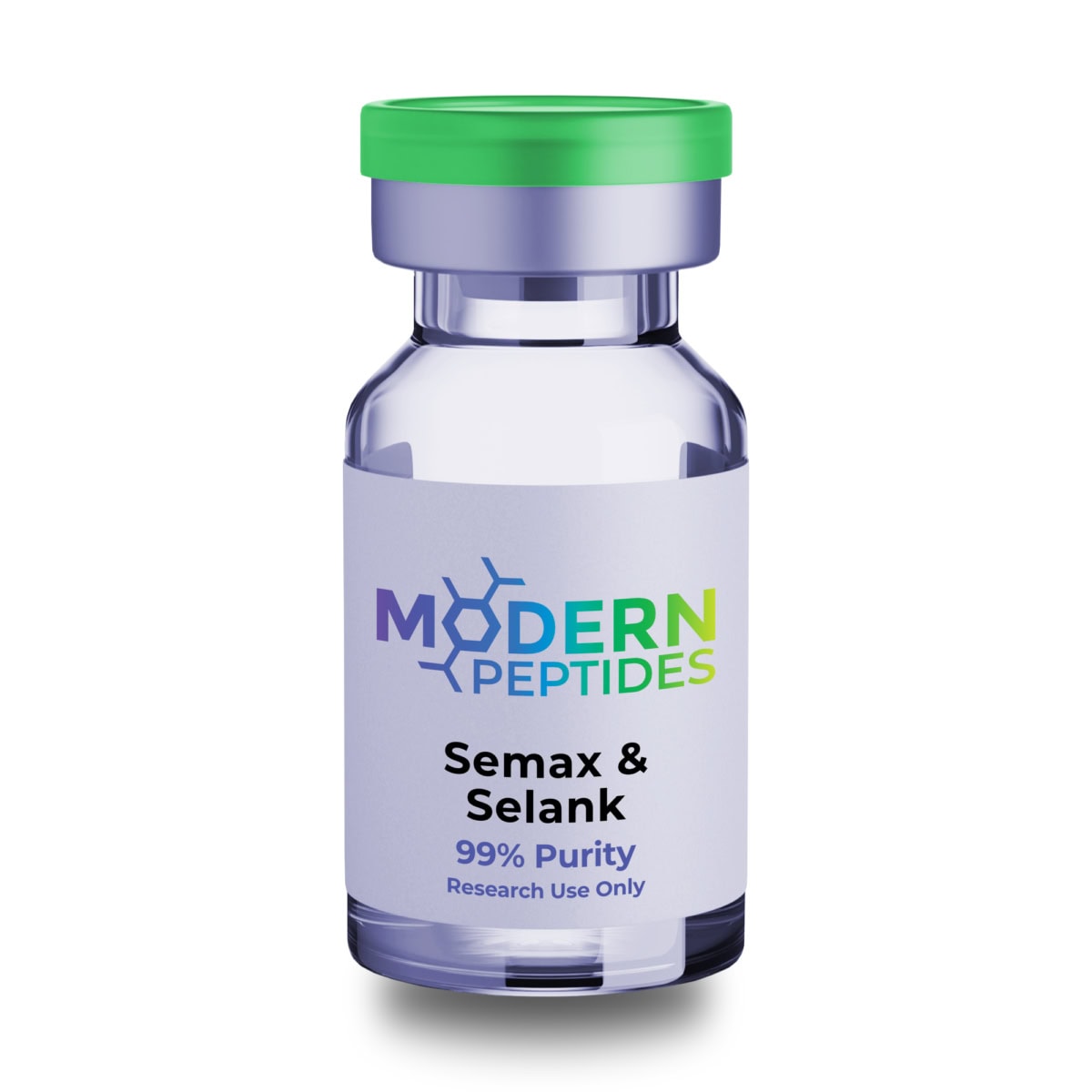
Semax is a synthetic heptapeptide analog derived from the ACTH(4–10) fragment that’s widely used in research models investigating neurotrophic signaling and stress-response biology. Preclinical research commonly evaluates Semax for its potential influence on pathways associated with neuronal plasticity and cellular resilience, including modulation of neurotrophin-related markers and neurotransmitter-linked signaling in controlled experimental settings.
Selank is a synthetic peptide based on the endogenous tuftsin sequence, studied primarily for its interaction with neuroimmune and neuromodulatory pathways. In research contexts, Selank has been evaluated for its effects on systems tied to adaptive stress signaling and inhibitory/excitatory balance, with particular attention to GABA-associated mechanisms and cytokine-linked biological markers in model environments.
When combined, Semax and Selank create a complementary dual-axis research blend for exploring cognition- and stress-related neurobiology. Semax is often positioned as a tool for probing neurotrophic and plasticity-adjacent signaling, while Selank is frequently used to study anxiolytic-adjacent and neuroimmune modulation pathways. Together, the blend can support experimental designs aimed at observing broader network effects—such as changes in plasticity markers alongside shifts in stress-response signaling—offering a more holistic view of neuroregulatory behavior than either peptide alone in controlled, non-clinical research systems.
Reviews
There are no reviews yet.